Tomás Garbarino · Buenos Aires, Argentina · Flock I+D
Product engineering for web products and AI.
I help turn complex or manual work into product flows people can understand, review and use. My work connects discovery, scope, implementation and validation across interfaces, backend logic and AI integrations.
Tell me what you want to build ↗From the problem to a working feature
- Product
- Shape a workflow around its real users, decision points, evidence and next actions.
- Implementation
- Build features across interfaces, backend logic and integrations, with scope and acceptance criteria agreed for the project.
- AI and systems
- Integrate AI into product workflows, connect outputs to source material and review, and contribute to architecture decisions.
Decisions, implementation and evidence
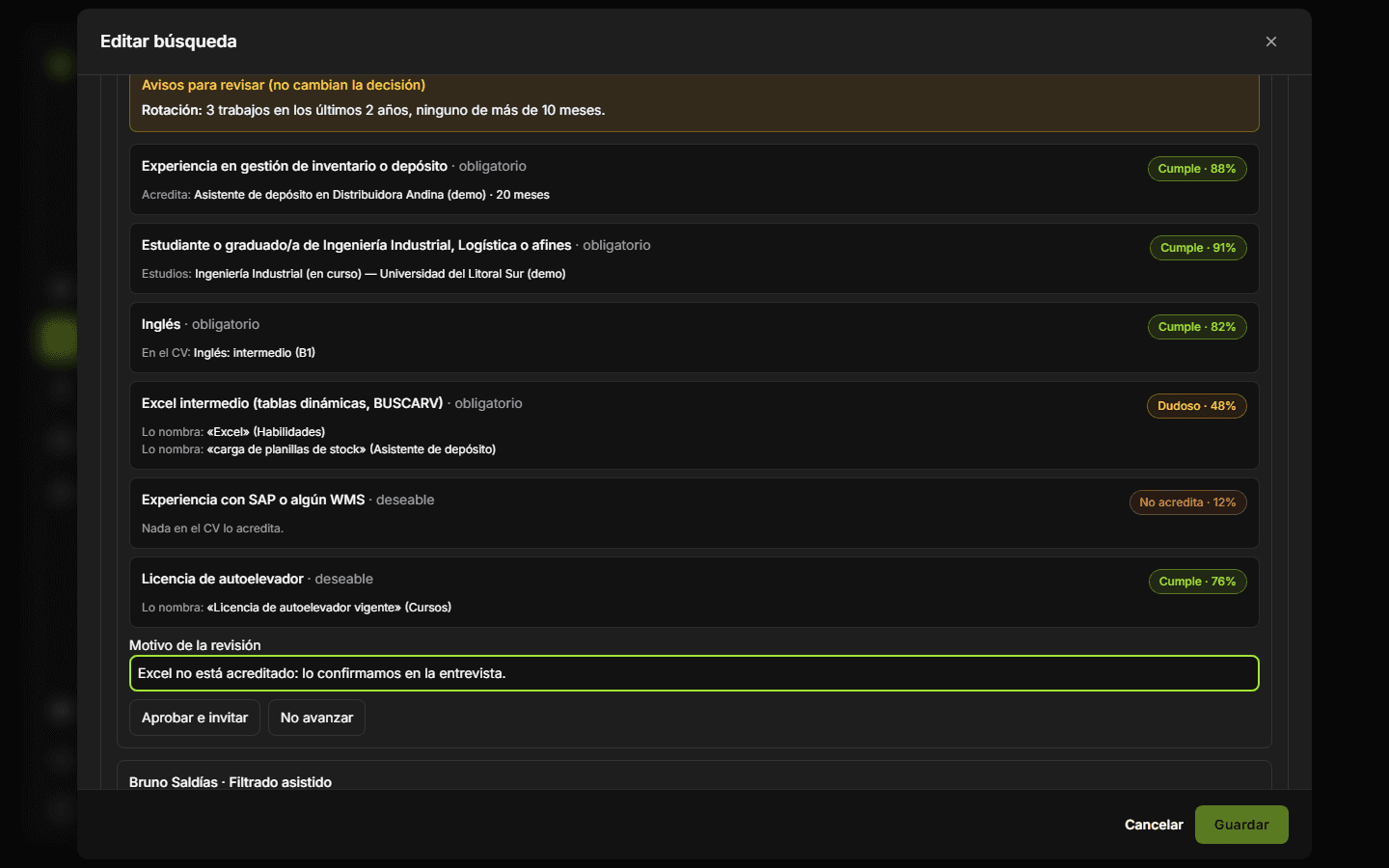
Agora · make missing requirements reviewable
At Flock I+D, I helped define a bounded guardrail: route searches with no structured skills to human review and extend the education catalog to recognize English degree names. The case records a team-reported post-release check of the affected case and a control search.
A Flock I+D product contribution; the case separates my role from the team's validation.
The validation is reported by the team, and the public case is anonymized. It does not establish quantified business impact.
Read the Agora case →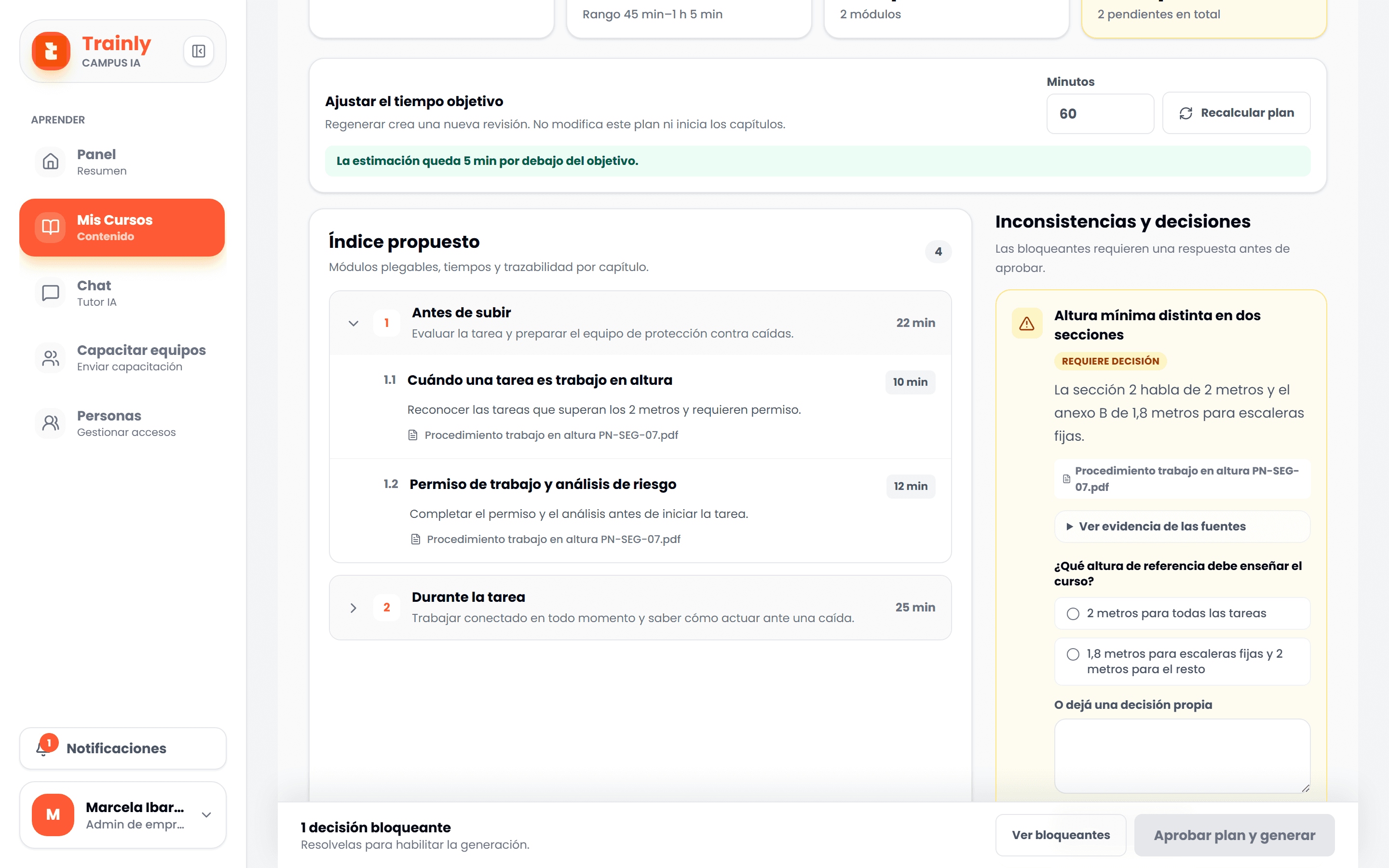
Trainly · keep AI generation tied to its sources
At Flock I+D, my scope includes product flow, frontend and AI integration. One example is a reviewable learning plan that traces chapters to source material and pauses generation when sources conflict, so a person can decide what to do.
Trainly is a Flock I+D product built by a team; my case names my contribution and the team's initial platform work.
The published interface captures use fictional data in a local demo. The case reports no quantified learning outcomes.
Read the Trainly case →FLOCK LABS / 2026JEVTomás Garbarino
JEV · evaluate model decisions against a stated reference
I authored a retrospective study of JEV in Agora: how to evaluate interview answers, choose CV decision thresholds and make the cost of human review explicit.
Research authored by Tomás Garbarino, published by Flock Labs on October 4, 2026.
The study separates retrospective evaluation from the production incident described in the Agora case.
Read the study and its methods →Where I can be useful
A good fit is a team with a real workflow to improve—such as learning from scattered company knowledge, making AI-supported decisions reviewable, or turning a manual process into a usable web product—and a need for someone who can connect product decisions with end-to-end implementation.